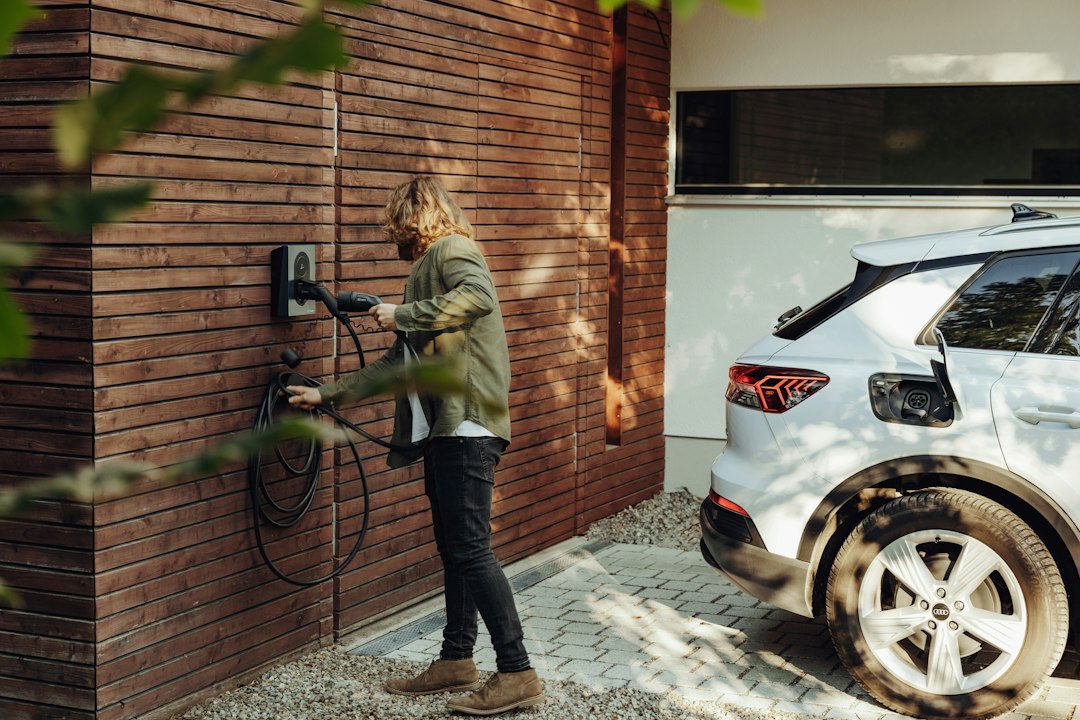
As Southern California continues its rapid transition to electric vehicles, homeowners across Los Angeles County are prioritizing efficient and reliable home charging. Installing a Level 2 EV charger is the most practical upgrade, delivering 20-35 miles of range per hour to ensure your EV is always ready. For a straightforward Level 2 installation in Los Angeles, expect costs to range from $1,200 to $3,500. However, older homes may require an electrical panel upgrade, adding $2,000-$4,500 to the total. To mitigate these costs and avoid a full service upgrade, innovative EV Energy Management Systems (EVEMS) or Power Control Systems (PCS) are increasingly utilized, typically costing $1,500-$2,200 for device and installation. The permitting process, mandatory in Los Angeles, usually takes 3-5 business days for express permits with complete documentation. Homeowners can also benefit from LADWP rebates, offering up to $1,000 for charger installation, with an additional $250 for a dedicated EV meter and $500 for income-eligible customers. These modern solutions make daily EV charging convenient and often more affordable than public stations.
Navigating Southern California’s Evolving EV Charging Landscape (2025-2026)
The regulatory environment for EV charging in California is dynamically evolving, with significant updates taking effect in 2025 and 2026. At KiloWire Electric, our team of licensed electricians stays at the forefront of these changes, ensuring every installation adheres to the latest standards, including the California Electrical Code (CEC) / Title 24 Part 3 and the comprehensive 2025 CALGreen Building Code (Title 24 Part 11), which became effective January 1, 2026.
Key Regulatory Updates for Homeowners:
- CALGreen 2025 (Title 24 Part 11): While primarily impacting new construction and major renovations, these mandates set a precedent for future installations. New one- and two-family dwellings with attached private garages now require an ‘EV-Capable’ space. This means a dedicated 208/240-volt branch circuit, typically 40 amperes minimum, must be installed in a raceway, and identified as ‘EV READY’ in the service panel directory. For new multifamily dwellings, 100% of assigned parking spaces must be ‘EV Ready’ with a low-power Level 2 (20-amp) receptacle, and 25% of unassigned common spaces require installed full-power Level 2 (40A-60A) chargers. This code also explicitly permits the use of automatic load management systems.
- NEC 2026 (Title 24 Part 3, California Electrical Code): Article 625, ‘Electric Vehicle Power Transfer System,’ governs the installation of EV Supply Equipment (EVSE). Crucially, NEC 2026 Section 625.42 has evolved, formalizing the use of Power Control Systems (PCS), previously known as Energy Management Systems (EMS), to reduce calculated feeder and service loads. This is a game-changer for homes with limited electrical capacity, as it can eliminate the need for costly service upgrades. All EVSE installations also require Ground-Fault Circuit Interrupter (GFCI) protection if operating at 150 volts or less to ground.
- LADBS Ordinances & Local Grid Regulations: In Los Angeles, the Department of Building and Safety (LADBS) requires an electrical permit for all EV charger installations, ensuring compliance with local safety standards. Our team navigates these specific requirements, including utility interconnections with SCE (Southern California Edison) and LADWP (Los Angeles Department of Water and Power).
Understanding Your Home’s Electrical Capacity: Panel Upgrades vs. Smart Solutions
One of the most common challenges homeowners face when installing a Level 2 EV charger is ensuring their existing electrical panel has sufficient capacity. Many older homes in Los Angeles County were built with 100-amp or 150-amp electrical services, which may already be near their capacity due to existing appliances. A Level 2 charger typically requires a dedicated 240-volt circuit drawing 30 to 50 amps.
- Electrical Panel Upgrade: If your panel lacks sufficient amperage or available breaker slots, an upgrade to a 200-amp panel is often necessary. This typically involves costs ranging from $2,800 to $4,500, depending on the panel size, wiring requirements, and labor. At KiloWire, we specialize in comprehensive electrical panel upgrades, ensuring your home’s infrastructure is robust and future-ready. Visit our ‘Electrical Panel Upgrade’ page for more information:
/services/electrical/panel-upgrade. - EV Energy Management Systems (EVEMS) / Power Control Systems (PCS): A groundbreaking alternative to a costly panel upgrade is implementing an EVEMS or PCS. As recognized by NEC 2026 Article 625.42(B), these intelligent systems automatically monitor your home’s total electrical load and dynamically adjust the power delivered to your EV charger, preventing overload without requiring a service upgrade. Devices like the DCC-12 by RVE/Thermolec, NeoCharge Smart Splitter, or a SPAN Smart Panel integrate seamlessly, allowing Level 2 charging even with limited existing capacity. These solutions typically range from $1,500-$2,200 for installation, offering significant savings compared to a full panel upgrade.
The Permitting Process in Los Angeles County: What to Expect
Installing an EV charger is a permanent electrical modification to your home and, as such, requires a permit from the Los Angeles Department of Building and Safety (LADBS). This ensures your installation complies with the California Electrical Code (Title 24 Part 3) and local safety standards, protecting your property and ensuring insurance coverage.
Our Streamlined Permitting Approach:
- Initial Diagnostic Assessment: Our licensed electricians conduct a $99 diagnostic assessment of your home’s electrical system, including a detailed load calculation to determine capacity for the new EV charger. This step is crucial and often identifies whether an EVEMS or panel upgrade is needed.
- Documentation & Site Plan: We prepare all necessary paperwork, including a site plan showing the charger’s location, conduit path, and electrical panel, along with detailed equipment specifications.
- Permit Application: We handle the submission of your permit application through the LADBS e-Permit System or EPIC-LA, leveraging express permit options for straightforward installations. Approval for residential applications with complete documentation is often obtained within 3 to 5 business days.
- LADBS Inspection: After installation, an LADBS inspector reviews the work to ensure full compliance. Our rigorous adherence to code ensures a smooth inspection process, minimizing delays and additional costs.
Maximizing Savings: Rebates and Incentives for Home EV Charging
Southern California homeowners have several opportunities to reduce the cost of EV charger installation through various rebates and incentives available in 2025 and 2026. Our team helps you identify and apply for eligible programs:
- LADWP Residential EV Charger Rebate Program: For LADWP customers, rebates of up to $1,000 are available for eligible Level 2 EV charger installations. An additional $250 rebate may be offered for a qualifying dedicated EV meter, and an extra $500 for Lifeline or EZ-SAVE participants, significantly lowering your out-of-pocket expenses.
- SCE Charge Ready Home Program: Southern California Edison (SCE) offers programs, such as the Charge Ready Home, which can assist qualifying homeowners with costs associated with electrical panel upgrades necessary for EV charging. While some SCE programs, like the New Construction Rebate, have closed, it’s essential to check for the latest offerings.
- Federal Tax Credits: The personal federal Section 30C EV charger credit for charging property was generally unavailable for property placed in service after June 30, 2026. Our specialists can advise on any current or emerging federal incentives.
Why Choose KiloWire Electric for Your EV Charger Installation?
At KiloWire Electric (Skill See Services Inc. DBA KiloWire Electric, CSLB #1110475, Class B + C-10 Electrical), we are more than just contractors; we are expert electrical engineers and field project specialists. Located at 6018 Washington Ave, Whittier, CA 90601, and proudly serving Los Angeles County, we provide unparalleled expertise in residential EV charger installations. Our commitment to precision, safety, and code compliance is evident in every project, from the initial $99 diagnostic assessment to the final LADBS inspection and utility interconnection with SCE/LADWP. We understand the nuances of the 2026 electrical codes and the specific challenges of Southern California’s older housing stock, ensuring a seamless and efficient installation process.
We don’t just install chargers; we engineer comprehensive, future-proof charging solutions tailored to your home’s specific needs, whether that involves a panel upgrade or a smart EVEMS. For a reliable, code-compliant, and cost-effective Level 2 EV charger installation, trust the KiloWire team. Contact us today to schedule your diagnostic assessment or learn more about our EV charging solutions: /services/electrical/ev-charger-installation or call us at (626) 600-0818.
EV Charger Installation Scenarios & Estimated Costs (Los Angeles, 2026)
| Solution | Capacity / Code Compliance | Avg Cost (Excl. Charger Hardware) | Avg Timeline | Key Benefit |
|---|---|---|---|---|
| Standard Level 2 Install | Dedicated 240V/40-60A circuit; NEC 2026 Art. 625 | $1,200 - $2,500 | 1-2 Days | Fastest, most direct if panel has capacity |
| With EVEMS/PCS Integration | Dynamic Load Management; NEC 2026 Art. 625.42(B) | $1,500 - $2,200 (device + install) | 2-3 Days | Avoids panel upgrade; intelligent power sharing |
| With Panel Upgrade (200A) | Increased Service Capacity; NEC 2026 | $2,800 - $4,500 (panel only) | 3-5 Days | Future-proofs home for multiple loads & EVs |
Note: Charger hardware costs (typically $300-$900) are in addition to installation costs. Rebates can significantly offset these figures.
Frequently Asked Questions (FAQ)
Q1: Do I need a permit to install a Level 2 EV charger in my Los Angeles home?
A1: Yes, an electrical permit from the Los Angeles Department of Building and Safety (LADBS) is mandatory for all Level 2 EV charger installations in Los Angeles County. This ensures safety and compliance with the California Electrical Code (Title 24 Part 3).
Q2: How can I avoid a costly electrical panel upgrade for my EV charger?
A2: You can often avoid a full electrical panel upgrade by utilizing an EV Energy Management System (EVEMS) or Power Control System (PCS). These smart devices, compliant with NEC 2026 Article 625.42(B), dynamically manage your home’s electrical load and the power supplied to your charger, preventing overloads without requiring a service upgrade.
Q3: What rebates are available for home EV charger installation in Southern California in 2026?
A3: LADWP customers may qualify for up to $1,000 for Level 2 EV charger installation, plus additional incentives for dedicated EV meters and income-eligible households. SCE offers programs that can assist with panel upgrade costs for qualifying homes. It’s best to consult with a KiloWire expert to determine all eligible current local and state incentives.
Q4: What is the 2025 CALGreen Code and how does it affect residential EV charging?
A4: The 2025 CALGreen Code (Title 24 Part 11), effective January 1, 2026, sets new mandatory requirements for EV charging infrastructure in new construction and major renovations in California. For single-family homes with attached garages, it mandates an ‘EV-Capable’ space. For new multifamily dwellings, it requires 100% of assigned parking spaces to be ‘EV Ready’ (low-power L2) and 25% of common spaces to have installed full-power L2 chargers.