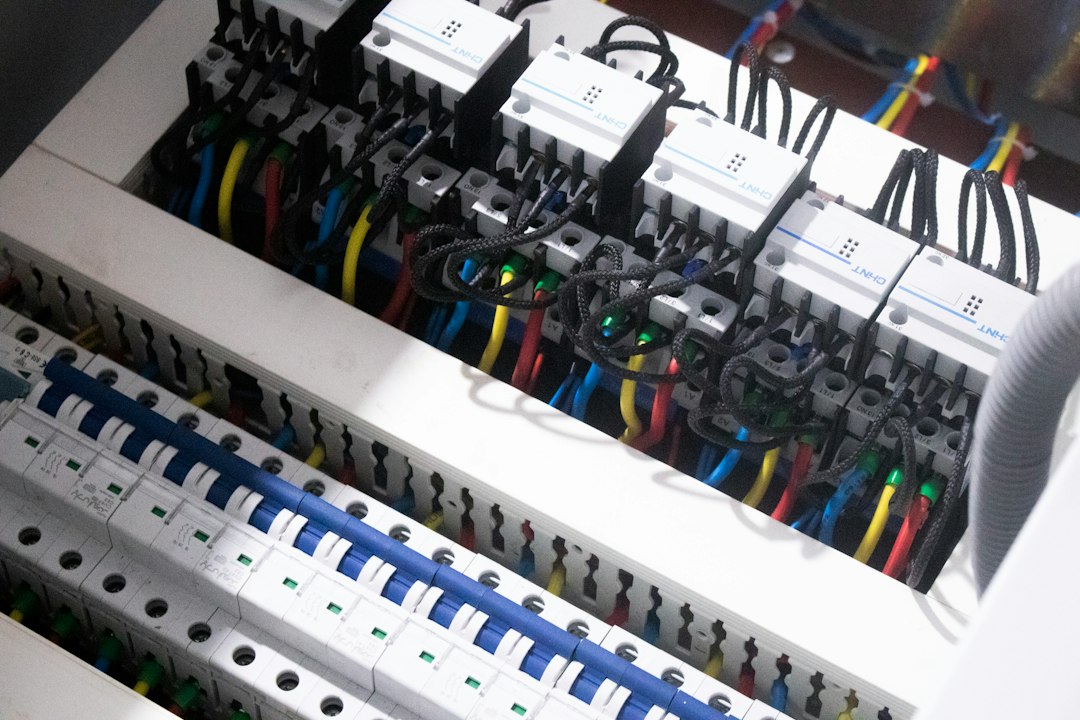
As expert electrical engineers and licensed contractors (CSLB #1110475, Class B + C-10 Electrical) at KiloWire Electric, we understand that upgrading your home’s electrical panel is a critical investment for safety, efficiency, and future readiness. For Southern California homeowners dealing with outdated 100A panels or hazardous Federal Pacific (Stab-Lok) and Zinsco panels, a 200A or 400A upgrade is often essential. Expect typical panel upgrade costs between $2,800 and $4,500, with a professional diagnostic assessment available for $99. Timelines usually involve 2-6 weeks for permitting and 1-3 days for installation. Significant California rebates can offset costs by $1,000 to $4,000 for eligible upgrades, particularly when combined with EV charger or solar installations. This upgrade not only addresses immediate safety concerns but also prepares your home for modern demands like EV charging, solar, and smart home technology, aligning with the latest 2025/2026 California Electrical Code (CEC) and NEC standards.
Is Your Electrical Panel a Safety Hazard or Bottleneck?
Many homes across Los Angeles County, particularly those built before the 1980s, still rely on original 100-amp electrical panels. While sufficient for the demands of their era, these older panels are often inadequate for today’s energy-intensive appliances, multiple EV chargers, and integrated smart home systems. Beyond capacity issues, certain legacy panel brands pose severe fire risks that demand immediate attention.
The Dangers of Federal Pacific and Zinsco Panels
At KiloWire, we regularly encounter Federal Pacific Electric (FPE) ‘Stab-Lok’ and Zinsco electrical panels, which are widely recognized as significant safety hazards. These panels were commonly installed between the 1950s and 1980s but are now notorious for critical design flaws. Federal Pacific Stab-Lok breakers, for instance, have a documented failure rate of up to 60% in failing to trip during an overcurrent or short-circuit event. This means they may not cut power when necessary, leading to overheating, melted wires, and potential electrical fires with no visible warning signs.
Zinsco panels, including those later rebranded as GTE-Sylvania, suffer from an equally dangerous defect: their aluminum bus bars can corrode and cause circuit breakers to fuse directly to the bus, rendering them incapable of tripping. Many jurisdictions now consider FPE and Zinsco panels to be code violations requiring correction upon major renovation or property transfer. Home insurance providers may even deny coverage or impose higher premiums for properties with these panels. Replacing these dangerous panels is not just an upgrade; it’s a mandatory safety imperative.
The Latest Electrical Code & Regulatory Updates for 2025-2026
Staying compliant with the rapidly evolving electrical codes in Southern California is paramount. Our team ensures every panel upgrade meets the most current standards, integrating advancements in safety and energy management.
California Electrical Code (CEC) and NEC 2026
Effective January 1, 2026, the 2025 California Electrical Code (CEC), which is Title 24, Part 3 of the California Code of Regulations, formally adopts the 2023 National Electrical Code (NEC) with California-specific amendments. Key updates for homeowners include:
- Mandatory Surge Protection: All new electrical panel installations and replacements in Los Angeles now require Type 1 or Type 2 whole-home surge protective devices (SPDs). Budget an additional $250-$600 for the SPD device and installation.
- Expanded AFCI/GFCI Requirements: Arc-Fault Circuit Interrupters (AFCIs) and Ground-Fault Circuit Interrupters (GFCIs) are now mandated for an expanded range of circuits, including nearly all 120-volt, 15- and 20-amp branch circuits in dwelling units such as kitchens, laundry rooms, bathrooms, and garages.
- EV Charger ‘Qualified Person’ Rule (NEC 2026): For permanently installed (hardwired) EV chargers, NEC 2026 Section 625.4 explicitly requires installation by a ‘qualified person,’ which local building departments interpret as a licensed electrician. This formalizes that complex EV charger installations are not DIY projects.
CalGreen (Title 24 Part 11) & EV Readiness
The 2025 CALGreen Building Code, also effective January 1, 2026, significantly updates EV charging infrastructure requirements.
- Single-Family Homes: When a main electrical service panel is altered, new single-family constructions must install a dedicated 40-amp, 208/240-volt EV branch circuit, capable of supporting Level 2 EV Supply Equipment (EVSE).
- Multifamily Dwellings: New multifamily construction requires 100% of assigned parking spaces to be ‘EV Ready’ (requiring a 20-amp circuit) and 25% of unassigned/common spaces to have ‘Full Power Level 2’ chargers installed (requiring a 40-amp to 60-amp circuit).
LADBS Ordinances and Seismic Retrofits
While not directly electrical, Los Angeles Department of Building and Safety (LADBS) Ordinances 183893 and 184081 mandate seismic retrofits for certain pre-1978 wood-frame soft-story buildings and non-ductile concrete structures. These retrofits often necessitate other structural or electrical work, which can trigger the need for a panel upgrade to meet current CEC standards. Our team is experienced in coordinating electrical upgrades within these broader renovation projects, ensuring compliance with LADBS requirements.
SCE and LADWP Grid Regulations
Navigating utility interconnection requirements is a critical step in any panel upgrade, especially when integrating solar or battery storage. Southern California Edison (SCE) operates under NEM 3.0 (Net Billing Tariff), which impacts solar export rates. Los Angeles Department of Water and Power (LADWP), as a municipal utility, maintains its own retail-rate net metering structure, offering different economic incentives for solar. For solar-plus-storage projects, an electrical panel upgrade may be required to accommodate new interconnection points or higher amperage. LADWP requires a Type 2 Interconnection Process if a service panel upgrade is needed for solar/battery projects even under 10kW.
Your Panel Upgrade Options: From 100A to 400A
Depending on your home’s current and future electrical demands, KiloWire offers tailored panel upgrade solutions:
- 100A to 200A Upgrade: This is the most common upgrade, providing ample power for most modern homes with new HVAC systems, larger appliances, and potentially one EV charger. This typically involves replacing your main breaker panel and often the meter.
- 200A to 400A Upgrade: For larger luxury homes, properties with multiple EV chargers, significant solar arrays with battery backup (e.g., Tesla Powerwall 3 or Enphase IQ8/5P systems), or multiple ADUs, a 400A service upgrade ensures maximum capacity and flexibility.
Smart Panels and EV Energy Management Systems (EVEMS)
For homeowners primarily needing to add an EV charger but facing panel capacity constraints, innovative EV Energy Management Systems (EVEMS), also known as Power Control Systems (PCS) in NEC 2026, can provide a cost-effective alternative to a full panel upgrade. Devices like the SPAN Smart Panel, DCC-12 by RVE/Thermolec, or NeoCharge Smart Splitter intelligently monitor your home’s real-time electrical load and dynamically manage power to your EV charger, preventing overloads without requiring a full service upgrade. These solutions, explicitly recognized by NEC Article 625.42, can cost between $1,500 and $2,200, offering significant savings compared to a $2,800-$4,500 panel upgrade. They are ideal for homes with a 100A panel that has some headroom but not enough for a dedicated 40A or 60A EV circuit.
Cost, Rebates, and Timeline for Your Panel Upgrade
Understanding the financial and time commitments is crucial for planning your electrical panel upgrade project.
Investment & Savings
- Diagnostic Assessment: KiloWire offers a comprehensive $99 diagnostic assessment to evaluate your current panel’s condition and capacity.
- Standard Panel Upgrade (100A to 200A): Costs typically range from $2,800 to $4,500, depending on the complexity, necessary meter socket upgrades, and utility service requirements.
- EVEMS Alternatives: For EV charging needs, smart load management solutions range from $1,500 to $2,200.
Available Grants and Rebates
California offers several incentives to encourage electrical upgrades, especially when paired with clean energy initiatives:
- California Panel Upgrade Rebates: Homeowners can receive between $1,000 and $2,500 for eligible upgrades, with low-income households potentially qualifying for $3,000 to $4,000. These are often tied to EV, solar, or broader electrification projects.
- SCE Charge Ready Home Program: Income-qualified Southern California Edison customers may receive up to $4,200 for electrical panel upgrades when installing EV charging.
- Federal & State Programs: While the federal 30% residential solar tax credit expired December 31, 2025, and single-family HEEHRA rebates are fully reserved as of February 24, 2026, the California HOMES program, funded by the Inflation Reduction Act, is expected to launch in mid-2026, offering up to $8,000 for low-income and $4,000 for moderate-income whole-home retrofits. Our team helps you identify and apply for all applicable grants.
Project Timeline
- Initial Assessment & Quote: 1-3 business days.
- Permit Application & Approval (LADBS, City/County): 2-6 weeks, depending on local jurisdiction and project complexity. An electrical service or panel upgrade always requires a permit and inspection.
- Utility Coordination (SCE/LADWP): 1-4 weeks for temporary power disconnection and reconnection.
- Installation: 1-3 days for a standard panel replacement, sometimes longer for complex 400A services or extensive wiring upgrades.
- Final Inspection: 1-2 days after installation.
Comparative Solutions for Electrical Upgrades
To help you decide the best path for your home, here’s a comparison of common electrical upgrade scenarios:
| Solution | Capacity / Code Compliance | Avg Cost Range | Timeline (Estimated) |
|---|---|---|---|
| 100A to 200A Panel Upgrade | Modern loads, single EV charger, NEC 2026, CalGreen EV Ready | $2,800 - $4,500 | 4-8 weeks (permit + install) |
| 200A to 400A Panel Upgrade | High demand, multiple EVs, solar + battery, future expansion | $6,000 - $10,000+ | 6-12 weeks (permit + install) |
| EVEMS for EV Charging (e.g., SPAN, DCC-12) | Manage EV load on existing panel (e.g., 100A), NEC 625.42 compliant | $1,500 - $2,200 (device + install) | 1-2 weeks (permit + install) |
| Federal Pacific/Zinsco Replacement | Critical safety upgrade, typically 100A to 200A, NEC 2026 | $3,000 - $5,000+ | 4-8 weeks (permit + install) |
Why Trust KiloWire for Your Panel Upgrade?
As a licensed electrical contractor (CSLB #1110475) with extensive experience in Southern California, KiloWire Electric (Skill See Services Inc. DBA KiloWire Electric) is your trusted partner for compliant, safe, and future-proof electrical solutions. Our team of licensed electricians and field project specialists, based at 6018 Washington Ave, Whittier, CA 90601, provides expert service across Los Angeles County. We handle all aspects of your panel upgrade, from initial load calculations and LADBS plan checks to utility interconnections with SCE or LADWP, ensuring your home’s electrical system is robust and up to code.
We pride ourselves on engineering-grade precision and direct, homeowner-focused communication. When you choose KiloWire, you’re investing in peace of mind and the long-term value of your property. Contact us today at (626) 600-0818 for a $99 diagnostic assessment or to discuss your panel upgrade needs.
Frequently Asked Questions About Electrical Panel Upgrades
Q1: How do I know if I need an electrical panel upgrade?
A1: You likely need an upgrade if your home has an older 100A panel struggling with modern loads, if you experience frequent tripped breakers, flickering lights, or if you plan to add major appliances, EV chargers, solar panels, or battery storage. Importantly, if you have a Federal Pacific or Zinsco panel, an upgrade is a critical safety necessity due to inherent fire risks.
Q2: What is the average cost and timeline for a 200A panel upgrade in Southern California?
A2: A standard 100A to 200A panel upgrade in Southern California typically costs between $2,800 and $4,500. The total timeline, including permitting with LADBS or your local city/county building department and utility coordination with SCE or LADWP, generally ranges from 4 to 8 weeks, with the actual installation taking 1 to 3 days.
Q3: Can I add an EV charger without upgrading my main electrical panel?
A3: Often, yes. Modern EV Energy Management Systems (EVEMS), or Power Control Systems (PCS), explicitly recognized under NEC Article 625.42, can intelligently manage the power draw of your EV charger within your existing panel’s capacity, potentially saving you the cost of a full panel upgrade. Devices like the SPAN Smart Panel or NeoCharge Smart Splitter are examples of these solutions.
Q4: Are there rebates or incentives available for electrical panel upgrades in 2026?
A4: Yes, California offers rebates for electrical panel upgrades, typically ranging from $1,000 to $4,000, especially when combined with electrification projects like EV charger or solar installations. SCE’s Charge Ready Home program also offers up to $4,200 for income-qualified panel upgrades. While some federal rebates for single-family homes are currently reserved, our team can help you identify and apply for eligible local and state incentives.
Q5: What are the new code requirements for electrical panel upgrades in California for 2026?
A5: Effective January 1, 2026, the 2025 California Electrical Code (CEC) mandates whole-home surge protection for all new panel installations, expands AFCI and GFCI protection requirements to nearly all residential circuits, and implements new EV readiness standards under CalGreen for homes undergoing service panel alterations.
For more detailed information or to schedule your electrical service, visit our Electrical Panel Upgrade page or contact us directly.