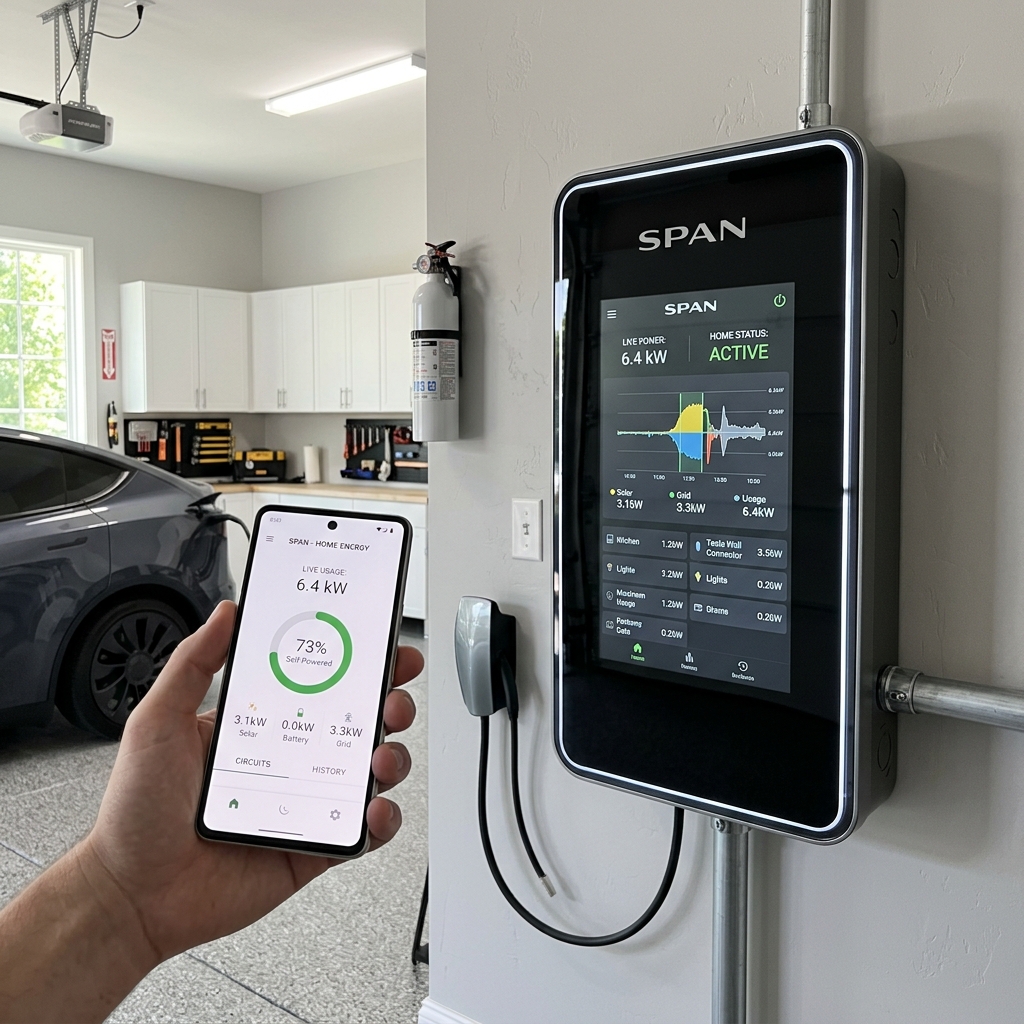
Deciding between a NEMA 14-50 vs hardwired EV charger installation is a key choice for homeowners, HOAs, and property managers in Los Angeles County. Hardwired chargers, such as a Tesla Wall Connector hardwire, generally offer faster, more reliable charging at higher amperages (up to 48-60A continuous) and often integrate GFCI protection, potentially avoiding expensive GFCI breakers. A NEMA 14-50 outlet provides portability for a plug-in EV charger, typically delivering 40A continuous charging, but current California Electrical Code (CEC) mandates costly GFCI protection for 240V receptacles. Installation costs for a Level 2 EV charger range from $1,200–$3,500 with existing panel capacity, plus $100–$300 for an EV charger permit in the City of Los Angeles. If a panel upgrade is required, costs can increase to $4,500–$7,000. Kilowire Electric offers a free estimate to help you choose the best solution for your property.
NEMA 14-50 vs Hardwired EV Charger: Key Differences
When considering an EV charging solution for your home or property in LA County, understanding the fundamental differences between a NEMA 14-50 outlet and a hardwired EV charger is crucial. Both provide Level 2 charging, significantly faster than a standard 120V outlet, but they differ in installation, performance, and code compliance.
What is a NEMA 14-50 Outlet for EV Charging?
A NEMA 14-50 outlet is a 240-volt, 50-amp receptacle commonly used for electric ranges or RV hookups. When installed for EV charging, it provides a dedicated circuit for a plug-in Level 2 EV charger. Due to the National Electrical Code (NEC) continuous load rule (which states that loads operating for three hours or more, like EV charging, must be calculated at 125% of the continuous load), a 50-amp circuit with a NEMA 14-50 outlet typically delivers 40 amps of continuous charging. This translates to roughly 25-30 miles of range per hour, depending on your vehicle.
One significant factor for a 14-50 outlet EV charging installation in California is the requirement for Ground-Fault Circuit Interrupter (GFCI) protection. Under the 2020 National Electrical Code (NEC), adopted by the California Electrical Code (CEC) as Title 24 Part 3, Article 210.8(F) mandates GFCI protection for all 240-volt receptacles up to 50 amps installed in dwelling units, garages, and accessory buildings. This means the circuit breaker for your NEMA 14-50 outlet will likely need to be a specialized, and often expensive, GFCI breaker. While the plug-in charger offers portability, this GFCI requirement can add a notable cost to the installation.
What is a Hardwired EV Charger?
A hardwired EV charger, also known as an Electric Vehicle Supply Equipment (EVSE), is permanently connected to your home’s electrical system without an outlet. This direct connection often allows for higher continuous amperage than a NEMA 14-50 outlet, depending on the charger and your panel capacity. For example, many popular hardwired chargers, including the Tesla Wall Connector hardwire, can be installed on a 60-amp circuit to deliver 48 amps of continuous charging, or even up to 60 amps on a 100-amp circuit, providing faster charging speeds (35-45+ miles of range per hour).
From a code perspective, hardwired chargers often have an advantage regarding GFCI protection. Many modern hardwired EVSEs come with integral GFCI protection, which, if listed to UL 2231-2, can satisfy NEC Article 625.54 and eliminate the need for an additional, costly GFCI breaker at the panel. This can make a hardwired installation more cost-effective in some cases compared to a NEMA 14-50 outlet installation that requires a GFCI breaker. Hardwired units are also typically more weather-resistant and offer a cleaner, more integrated aesthetic.
Cost Considerations for Your EV Charger Installation
The investment in a Level 2 EV charger varies based on several factors, including the type of charger, your existing electrical panel capacity, and the distance from your panel to the charging location.
For a Level 2 EV charger installation when your existing electrical panel has sufficient capacity, you can expect costs to range from $1,200–$3,500. This range typically includes the charger unit itself, the dedicated circuit, wiring, labor, and basic installation. However, remember that if you opt for a NEMA 14-50 outlet, the specialized GFCI breaker required by current code can add to the overall cost of the dedicated circuit installation.
If your property’s electrical panel is older or lacks the necessary capacity to support a new Level 2 EV charger, a panel upgrade may be required. An EV charger installation combined with a 100A to 200A panel upgrade can range from $4,500–$7,000. This is a significant investment but ensures your home’s electrical system can safely handle the increased load. Our team can help you determine if your panel needs an upgrade. You can learn more about this process in our guide on electrical panel upgrades and EV charging without a panel upgrade.
Permitting is a mandatory step for all EV charger installations in Los Angeles County. The cost for an EV charger permit in the City of Los Angeles typically falls between $100–$300. We pull and manage the permit for you; depending on your city we file with the right agency. For example, in the City of Los Angeles, we work with LADBS, and in unincorporated areas of LA County, with LA County Public Works Building and Safety. We always advise homeowners, HOAs, and property managers to confirm specific requirements with their city’s building department on its official website. For more details on permits, visit our page on permits and inspection coordination.
Please note: prices are for general reference; the price of each project is individual and depends on the building and the scope of work, and is confirmed after an estimate.
Performance and Practicality: Hardwired vs Plug-in EV Charger
Beyond initial costs, the long-term performance and practical aspects of your chosen EV charging solution are important.
Charging Speed: As discussed, hardwired chargers often allow for higher continuous amperage, providing faster charging. While a 14-50 outlet EV charging setup typically maxes out at 40 amps continuous, many hardwired units can deliver 48 amps or even 60 amps, significantly reducing charging times, especially for larger EV batteries. This difference can be crucial for drivers with long commutes or multiple EVs.
Reliability and Safety: Hardwired connections are generally considered more robust and less prone to issues like loose connections or wear-and-tear that can occur with frequent plugging and unplugging. The absence of a physical plug-in connection can also reduce potential points of failure and enhance overall safety. Our electricians ensure all installations adhere strictly to the California Electrical Code (CEC) and NEC standards, including proper grounding and circuit protection, to prevent hazards. For any electrical concerns, remember to shut off the main breaker only if safe, then call a licensed electrician.
Aesthetics: A hardwired charger often provides a cleaner, more integrated look, especially if conduit is run neatly along a wall or concealed. A NEMA 14-50 outlet with a plug-in charger can sometimes appear less streamlined.
Future-Proofing: While technology evolves, a hardwired charger installed with sufficient circuit capacity (e.g., a 60-amp circuit) offers excellent future-proofing, capable of supporting most current and future EV charging needs. If your vehicle changes, you might only need to replace the charger unit itself, not the entire wiring infrastructure.
Making the Right Choice for Your LA Property
The decision between a NEMA 14-50 vs hardwired EV charger ultimately depends on your priorities:
- Choose a NEMA 14-50 outlet if you prioritize the flexibility of a plug-in unit, potentially for portability (though moving a 240V charger isn’t common) or if you already own a charger that plugs into a 14-50. Be aware of the added cost for the GFCI breaker.
- Choose a hardwired EV charger if you seek the fastest possible charging, enhanced reliability, a cleaner aesthetic, and potentially lower overall installation costs due to integral GFCI protection. This is often the preferred choice for dedicated home charging. The Tesla Wall Connector is a popular hardwired option known for its performance and smart features.
Our Kilowire Electric team has over 15 years of experience installing EV chargers across Los Angeles County. We hold a CSLB License #1110475 (B and C-10) and carry $1M in general liability coverage, providing you peace of mind. All our installations come with a 1-year workmanship warranty, and we honor any manufacturer’s warranty on the equipment itself. We offer a free estimate to assess your property’s specific electrical needs and help you navigate the options. Contact us today to discuss your EV charger installation project.
Comparison Table: NEMA 14-50 vs. Hardwired EV Charger
| Feature | NEMA 14-50 Plug-in EV Charger | Hardwired EV Charger |
|---|---|---|
| Connection Type | 240V outlet (NEMA 14-50) | Permanently wired to electrical system |
| Typical Amperage | 40A continuous (on a 50A circuit) | 48A (on a 60A circuit) or 60A (on a 100A circuit) continuous |
| Charging Speed | ~25-30 miles/hour | ~35-45+ miles/hour (depending on amperage) |
| GFCI Requirement | Required for the outlet (NEC 210.8(F)), often an expensive breaker | Often integral to the charger (NEC 625.54), potentially saving cost |
| Installation Cost | $1,200–$3,500 (existing panel), potentially higher due to GFCI breaker | $1,200–$3,500 (existing panel), potentially lower due to integral GFCI |
| Portability | Charger can be unplugged (though not easily moved) | Fixed installation, not portable |
| Aesthetics | Outlet visible, charger plugs in | Cleaner, integrated look |
| Reliability | Good, but plug/outlet can wear over time | Excellent, robust permanent connection |
Frequently Asked Questions
Q1: Do I need a permit for an EV charger installation in Los Angeles?
A1: Yes, all Level 2 EV charger installations in Los Angeles County require an electrical permit to ensure safety and code compliance. We manage the entire permitting process for you, filing with the appropriate local agency, such as LADBS in the City of Los Angeles or LA County Public Works Building and Safety in unincorporated areas.
Q2: What is the continuous load rule and how does it affect EV charging?
A2: The continuous load rule, found in the NEC, states that electrical circuits supplying loads operating for three hours or more (like EV charging) must be sized for 125% of the continuous load. This means a charger drawing 40 amps continuously needs a 50-amp circuit, and a 48-amp charger needs a 60-amp circuit.
Q3: Why is GFCI protection important for EV chargers?
A3: GFCI (Ground-Fault Circuit Interrupter) protection is a critical safety feature designed to prevent electric shock by quickly shutting off power if it detects a ground fault. For NEMA 14-50 outlets, current code mandates GFCI protection. Many hardwired EV chargers have this protection built-in, offering safety without an additional expensive GFCI breaker.
Q4: Can my existing electrical panel handle an EV charger?
A4: It depends on your panel’s current capacity and existing electrical loads. Many older 100-amp panels may require an upgrade to safely accommodate a Level 2 EV charger. Our electricians perform a load calculation to determine if your panel has sufficient capacity or if an upgrade is necessary.
Q5: How long does an EV charger installation typically take?
A5: Most standard Level 2 EV charger installations, assuming adequate panel capacity and proximity to the panel, can be completed in a single day. More complex installations requiring panel upgrades, extensive wiring, or trenching may take longer, often a few days to a week.
Get a Free Estimate
Questions about your home? Call (626) 600-0818 or request a free estimate. A diagnostic visit is $99. We pull and manage the permit for you; depending on your city we file with the right agency.
Prices are for general reference. The price of each project is individual and depends on the building and the scope of work, and is confirmed after an estimate. Permit rules, fees, codes and utility requirements vary by city and change over time. Please confirm the details on the official website of your city's building department and your utility before starting work.
Written by the KiloWire Team. Kilowire Electric is a d/b/a of SKILL SEE SERVICES INC, CSLB License #1110475 (B, C-10), 6018 Washington Ave, Whittier, CA 90601.