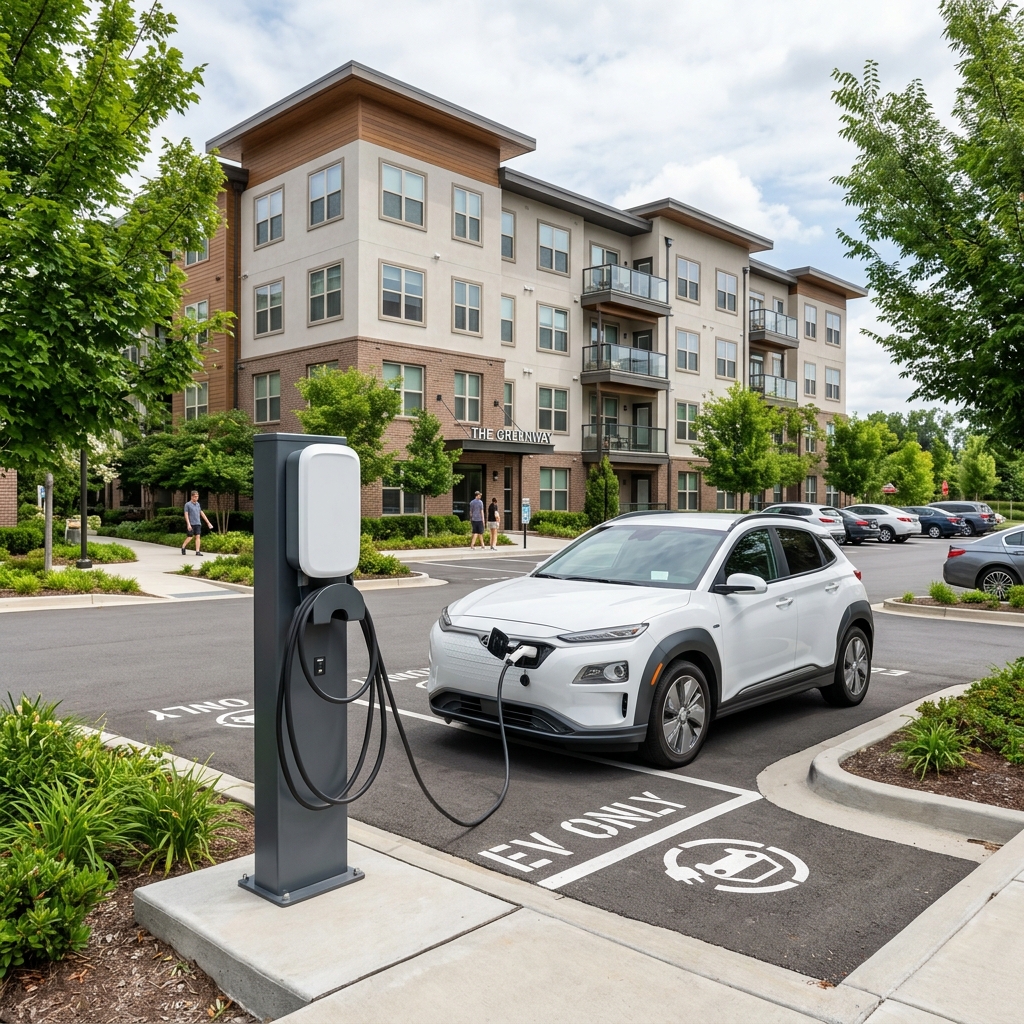
Los Angeles building owners and homeowner associations (HOAs) are facing a strict new regulatory landscape. Under the 2026 California Green Building Standards Code (CALGreen), which takes full effect on January 1, 2026, electric vehicle (EV) charging infrastructure is no longer an optional luxury — it is a mandatory requirement for multifamily residential buildings with 5 or more units.
If you own an apartment complex, manage a condominium development, or sit on an HOA board, understanding these regulations is critical. Failing to comply can stall renovations, lead to permit denials, or result in occupancy permits being withheld.
Here is a detailed breakdown of what CALGreen 2026 requires for multifamily buildings, how the trigger thresholds work, and how you can fund these upgrades.
The Core Mandates: EV-Capable vs. EVCS-Ready
The CALGreen code divides EV infrastructure requirements into three tiers of preparation. For buildings with 5 or more units undergoing new construction or major modifications, the standards are clear:
- EV-Capable Spaces: These are parking stalls equipped with a continuous raceway (conduit) running from the electrical panel to the parking space, ending in a listed box or enclosure. No wiring is pulled, and no charger is installed, but the physical path is established. The panel must have dedicated space and capacity to support a minimum 40-amp branch circuit.
- EV-Ready Spaces: These stalls have the conduit installed, the wire pulled, and a receptacle (typically a NEMA 14-50 240V plug) or a circuit terminating at a junction box, ready for a charger to be connected.
- Electric Vehicle Charging Stations (EVCS): These are parking spaces that are fully operational, with the Level 2 EV charging station installed, wired, and connected to the electrical supply.
For new multifamily constructions and major renovations, CALGreen requires 10% of all parking spaces to be EVCS-Ready, and a minimum of 25% of spaces to be EV-Capable.
What Triggers the CALGreen Requirements?
Many property owners mistakenly believe these rules only apply to new construction. In reality, CALGreen triggers apply to existing properties under several common scenarios:
- Parking Lot Renovation: Any modification, expansion, or resurfacing of a parking lot that requires a municipal permit will trigger CALGreen compliance. If you add spaces, modify ADA stalls, or trench the asphalt for repairs, you must make a percentage of those spaces EV-capable.
- Electrical Service Upgrades: If your property upgrades its main electrical panels or adds capacity, local building departments will require you to allocate a portion of that new capacity to support EV infrastructure.
- Building Additions & Renovations: Major renovations where the permit value exceeds a local threshold will trigger a full code review, including parking lot electrification requirements.
Navigating these triggers requires coordinating with local authorities like the Los Angeles Department of Building and Safety (LADBS). Our team provides done-for-you permit handling through our turnkey commercial EV infrastructure services.
The Dual-License Advantage for HOA & Apartment Projects
Installing EV infrastructure is a multi-phase civil and electrical engineering task. A standard installation involves:
- Cutting and trenching asphalt or concrete parking lots.
- Pouring concrete footings and structural bases for charging pedestals.
- Running underground conduits and high-voltage wiring.
- Upgrading main electrical panels and utility transformers.
- Installing and commissioning the actual smart EV chargers.
Because we hold both a Class B General Building license and a C-10 Electrical license, KiloWire manages this entire scope in-house. We do not hire separate excavators, concrete contractors, or utility coordinators. This single-source execution saves property managers up to 30% in project costs and cuts timelines by weeks.
If your project requires utility coordination or a main panel replacement, our licensed team handles the process seamlessly, from panel upgrades to utility connection.
How to Get Your Project Fully Funded
While CALGreen mandates represent a capital expense, California offers some of the most aggressive incentive programs in the nation to offset these costs:
1. Communities in Charge Grant
This state program provides up to $8,500 per Level 2 charging port for multifamily residential buildings. For properties located in designated disadvantaged or low-income communities in LA County, the grant can cover up to 100% of the equipment and installation costs. KiloWire is an authorized installer and handles the grant application on your behalf.
2. Southern California Edison (SCE) Rule 29
Under SCE’s Rule 29, the utility will design, install, and pay for all high-voltage electrical infrastructure up to your property line (the “make-ready” infrastructure). This eliminates the cost of transformer upgrades and trenching on the utility side.
Get a Free CALGreen Compliance Assessment
Don’t wait until you receive a stop-work order or a permit rejection to think about EV charging. KiloWire offers free preliminary site assessments for HOAs, apartment owners, and commercial properties. We will review your property’s existing panel capacity, inspect your parking layout, and provide a clear compliance plan alongside eligible grant estimates.
Learn more about our services on our Commercial EV Infrastructure page, or contact our team directly for a consultation.