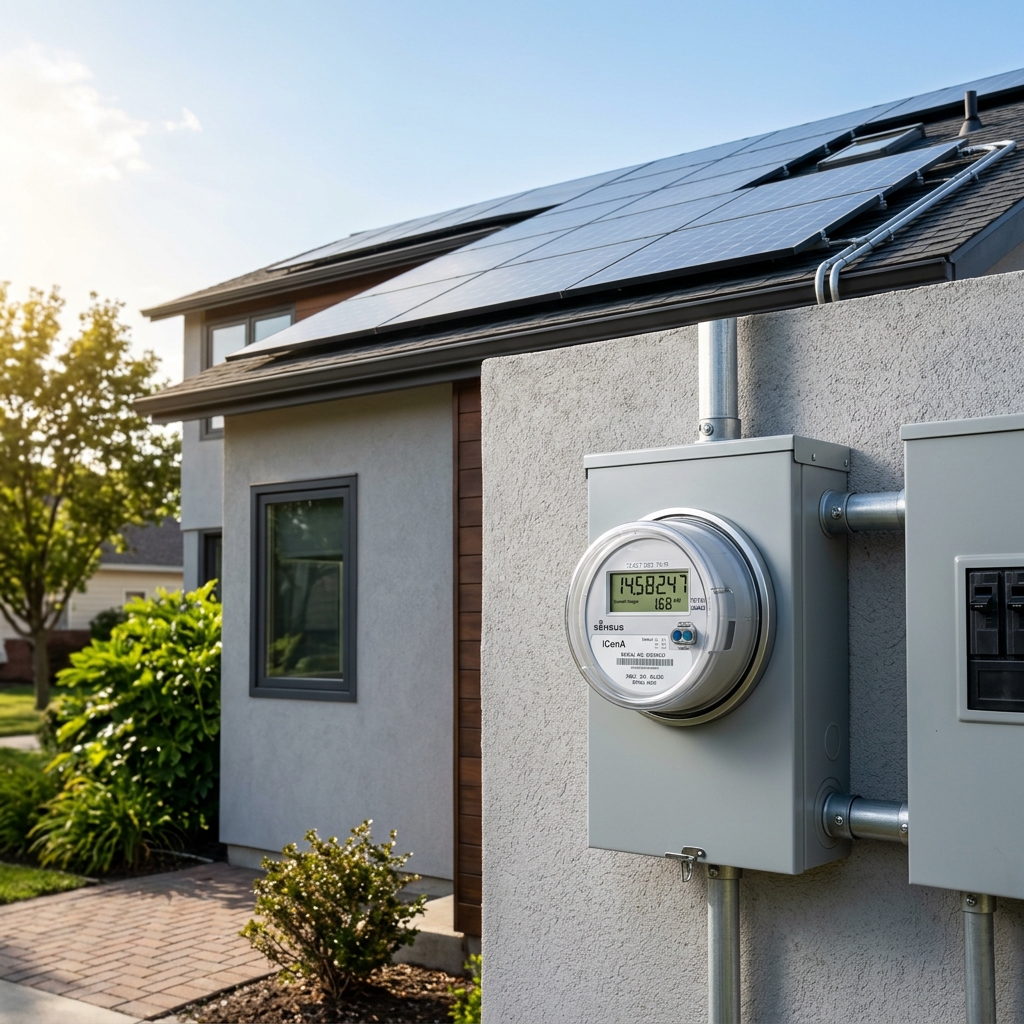
Southern California Edison’s residential rates have increased approximately 83% since 2020. If you’re on a Time-of-Use (TOU) plan — and if you’ve gone solar or are considering a battery, you should be — your electricity bill is now shaped almost entirely by when you use power, not just how much.
Here’s what’s changed, why it matters, and how the right equipment turns rate volatility into a predictable, controllable expense.
What SCE’s TOU Plans Actually Mean
Under SCE’s most common residential TOU plans (TOU-D-4-9PM, TOU-D-PRIME), electricity is priced in two tiers:
Off-peak: Midnight to 4pm, and 9pm to midnight. Rates are relatively low — this is when your solar panels are producing and when the grid has surplus.
On-peak: 4pm to 9pm, every day including weekends. This is when the grid is under maximum strain — everyone’s home, appliances are running, solar production drops off as the sun falls. On-peak rates are 2–4× higher than off-peak.
The trap most homeowners fall into: their solar panels produce midday (off-peak), but their biggest loads — cooking, laundry, EV charging, air conditioning — run in the evening (on-peak). So they’re selling cheap and buying expensive.
NEM 3.0 made this worse. Under the new rules, the export credit you get for sending solar back to the grid at 1pm dropped by up to 75%. Your panels are still producing, but the credit is nearly worthless.
The Solution: Store Midday, Discharge at 4pm
A properly configured home battery system flips the equation. Here’s how it works:
Noon–4pm (off-peak, peak solar production): Instead of exporting to the grid for a low credit, your solar charges your battery. Full.
4pm–9pm (on-peak, peak rate hours): Your battery discharges, powering your home. You draw little or nothing from the grid during the most expensive window.
9pm–midnight (off-peak): If your battery is depleted, the grid charges it at low rates. Any remaining overnight charging runs in cheap off-peak hours.
Net result: Your home is almost never purchasing on-peak power. On a $300/month bill, the savings can be $80–$150/month — a payback period of 5–8 years on the battery, before incentives.
Automating Rate Arbitrage with a Smart Panel
The challenge with manual rate optimization is that it requires constant attention. A SPAN smart panel or a properly programmed battery management system removes the human element entirely.
Here’s what automation handles:
EV charging scheduling: Your EV plugs in at 6pm, but the smart panel holds charging until 9:01pm — when off-peak rates kick in. You wake up to a full battery and didn’t spend a cent at on-peak rates.
Appliance load shifting: Large loads like water heaters and pool pumps can be scheduled to run during cheap hours, with no behavior change required from you.
Battery dispatch rules: The system knows your utility rate schedule and dispatches battery power automatically during peak windows, recharging during cheap windows.
Solar self-consumption: Rather than exporting for low credit, the system prioritizes charging your battery first, then powering your home — maximizing the value of every kWh your panels generate.
2026 Rate Outlook: It Gets Worse Before It Gets Better
SCE has filed for additional rate increases through 2027 tied to grid infrastructure investment, wildfire mitigation, and the ongoing transition to TOU-based pricing. Current projections suggest another 15–25% increase in on-peak rates by end of 2026.
That means the value of peak-hour battery discharge — and the cost of buying grid power at peak — both increase. Every year you delay the battery retrofit, the financial case gets stronger, but the monthly bill damage is already happening.
The SGIP (Self-Generation Incentive Program) rebates currently available — which can offset $1,000+ per kWh of battery capacity — are allocated on a first-come basis. Waitlists are real. The homeowners who move now get the rebates; the ones who wait may not.
What a Properly Sized System Looks Like
The right system size depends on your consumption, solar output, and utility plan. As a rough guide:
| Home Profile | Recommended Battery | Estimated Monthly Savings |
|---|---|---|
| 2BR, no EV, modest AC | 10–14 kWh (1× Powerwall) | $60–$90/month |
| 3–4BR, 1 EV, central AC | 14–27 kWh (2× Powerwall or equivalent) | $100–$160/month |
| Large home, 2 EVs, high usage | 27+ kWh (Powerwall 3 stack or Enphase) | $150–$220/month |
These numbers improve as SCE rates increase. They also improve if you qualify for SGIP’s equity-based adder, which provides significantly higher per-kWh incentives for qualifying income levels.
The Installation Requirement You Can’t Skip
California’s CSLB requires that battery storage systems be installed by a licensed C-10 (Electrical) contractor. This matters for two reasons:
- SGIP eligibility requires a C-10 contractor on the installation record. Installations by solar-only companies without a C-10 license disqualify the system from rebates.
- Battery manufacturer warranties (Tesla, Enphase, Franklin) typically require licensed installation for warranty coverage.
KiloWire holds an active C-10 license (CSLB #1110475) and processes battery permits through SolarAPP+ — reducing permit approval from 4–6 weeks to one business day in most LA County jurisdictions.
The Practical Next Step
If you’re on a TOU plan and don’t have battery storage, you’re paying the full cost of peak-hour power with no protection. The math on adding storage has never been more favorable, and the incentives available right now — SGIP plus the 30% federal ITC — reduce the upfront cost significantly.
KiloWire offers free battery assessments: we review your SCE bills, your existing solar output (if any), and your TOU plan, and give you a written proposal for a system sized to your actual usage.